Effect of mutation of lysine-120, located at the entry to the active site of O-acetylserine sulfhydrylase-A from Salmonella typhimurium
Abstract
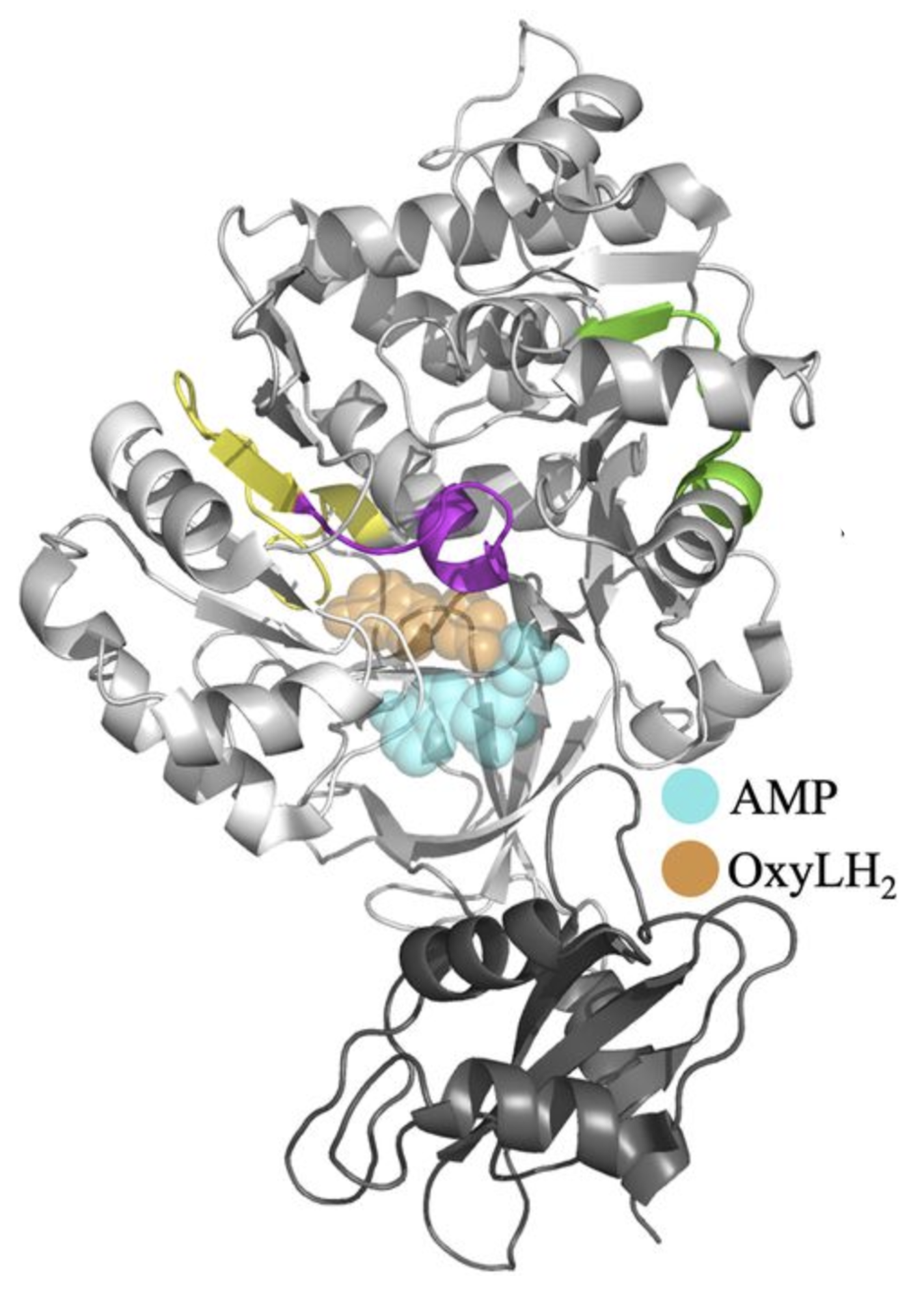
O-Acetylserine sulfhydrylase catalyzes the final step of the biosynthesisof l-cysteine, the replacement of the β-acetoxy group of O-acetyl-l-serine (OAS) by a thiol. The enzyme undergoes a conformational change to close the site upon formation of the external Schiff base (ESB) with OAS. Mutation of K120 to Q was predicted to destabilize the closed form of the ESB and decrease the rate. The K120Q mutant enzyme was prepared and characterized by UV-visible absorbance, fluorescence, visible CD, and 31P NMR spectral studies, as well as steady state and pre-steady state kinetic studies. Spectra suggest a shift in the tautomeric equilibrium toward the neutral enolimine and an increase in the rate of interconversion of the open and closed forms of the enzyme. A decrease in the rate of both half reactions likely reflects the stabilization of the ESB as a result of the increased rate of equilibration of the open and closed forms of the enzyme along the reaction pathway. Data suggest a role of K120 in helping to stabilize the closed conformation by participating in a new hydrogen bond to the backbone carbonyl of A231.