Mapping the structural dynamics of red- and blue-emitting beetle luciferases revealed by HDX-MS
Life Science Alliance. (2025) 10.26508/lsa.202503385
Abstract
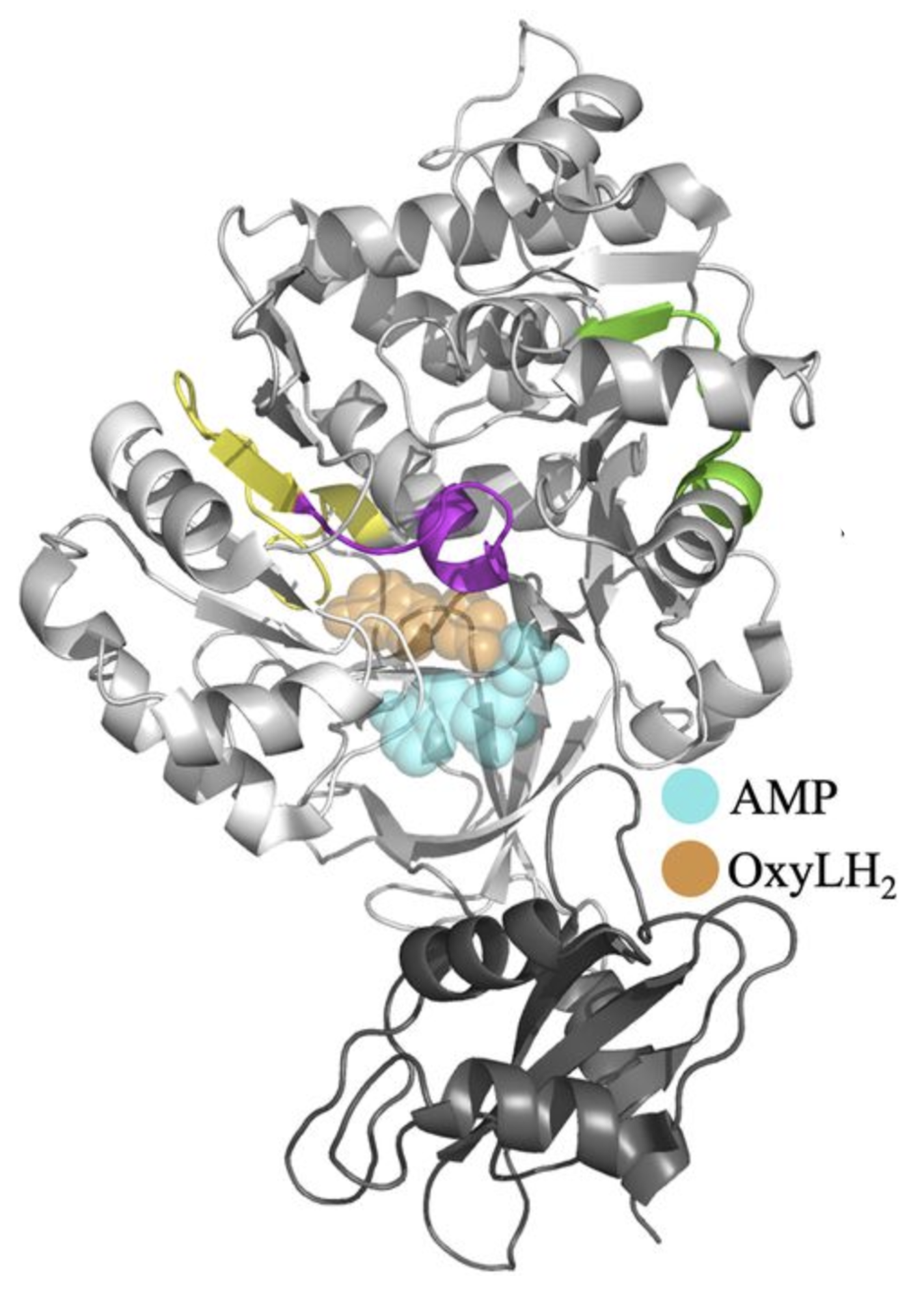
Beetle luciferases catalyze bioluminescent reactions using identical substrates—luciferin, ATP, and oxygen—yet emit colors ranging from green to red. As the luciferase fold is highly conserved, the structural basis of this spectral diversity remains elusive. Hydrogen/deuterium exchange mass spectrometry (HDX-MS) was used to systematically probe the conformational dynamics of green-emitting Amydetes vivianii luciferase (GBAv) and red-emitting Phrixothrix hirtus luciferase (REPh), along with their color-shifting mutants, R337L and L334R, respectively. HDX-MS profiling in the apo and ligand-bound states mapped dynamic changes associated with substrate binding and color modulation. REPh and the red-shifted R337L GBAv mutant exhibited globally higher dynamics, particularly in N-terminal domain peptides surrounding the active site, than their blue-green-emitting counterparts. Substrate binding reduced deuterium uptake in all enzymes; however, red-emitting forms retained greater flexibility. These findings establish a direct link between structural dynamics and bioluminescence color tuning in beetle luciferases, providing mechanistic insight into spectral control.